Wn62 Colleville-sur-Mer, (Omaha Beach)

Details
Leutnant Edmund.
3./Gren.Regt.726 at Wn63.
31 Soldiers. 21 Infantry & 7 Art/Obs.
Artillery Obs. Lt Frerking. Corporal Hein Serverloh.
1./352 at Houtteville.
1 x Vf69 bunker.
2 x Vf61a bunker.
2 x R669 casemates.
1 x R667 casemate under construction
MG. Ringstand AA.
2 x SK bunkers.
1 x Vf2d bunker.
1 x Observation.
2 x 7.5cm F.K.235 (b).
1 x 5cm KwK L/60
1 x 7.5cm Pak
.
Automatic Flame throwers.

Capa landed slightly to the middle between Wn62 and Wn64, in the crossfire.

Capa.
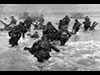
Capa.
Wn62 Colleville-sur-Mer, (Omaha Beach)
Google
Details
Wn62 Colleville-sur-Mer, (Omaha Beach)

06 October 2013
Details
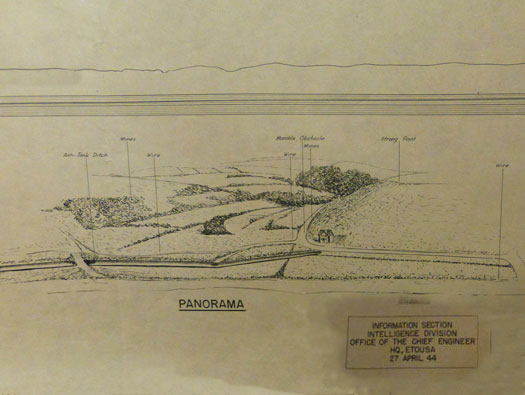
Plan of the landing area E3, Fox Green, issue date 27 April 1944 by ETOUSA (HQ European Theatre of Operations, United States Army) initially based at 20 Grosvenor Place, London.
"Click here for a larger image" of a plan of all of Omaha beach showing the 'Draws', and the beach names.

American generals: seated left to right are William H. Simpson, George S. Patton, Jr., Carl Spaatz, Dwight D. Eisenhower, Omar Bradley, Courtney H. Hodges, and Leonard T. Gerow; standing are Ralph F. Stearley, Hoyt S. Vandenberg, Walter Bedell Smith, Otto P. Weyland, and Richard E. Nugent

20 Grosvenor Place, London.

D-Day planning map at Southwick house.
Wn62 Colleville-sur-Mer, (Omaha Beach)

06 October 2013
Details
Wn62 along the skyline exactly where it should have been placed. The Fortress Engineer got it absolutely right.
The concrete block has nothing to do with any defence and was part of a stone crushing machine that was used in the production of concrete to make the defences. There was also a light railway to convey the crushed stone to different building sites of new bunkers to be ready for later 1944.
These two blocks were moved sideways by the US engineers to make access to the beach easier.

A US stone crusher working in Varreville after D-Day.

Cement mixer that may have been on the concrete blocks..

Bunker under construction.
Wn62 Colleville-sur-Mer, (Omaha Beach)

Plan
Details
German Army map of the area showing StP Colleville. Combined Wn62a (became 63 Hq) & Wn61 with Wn62.
Arnsberg - Anhalt - Ursula - Andranach - Anna - Altenburg - Frieda and Aller are all pre registered targets for the beach area, these
Lt Frerking called call down from his batterie situated at Houtteville.
Wn62 Colleville-sur-Mer, (Omaha Beach)

Plan
Information
Wn62 Colleville-sur-Mer, (Omaha Beach)
Details
Plan based on a 1947 air photo.
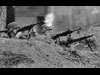
There were at least three machine guns, Serverloh's was an M.G.34, there was also an M.G.42 and an M.G.08 a 1908 water cooled machine gun firing at a much slower rate but still deadly in the right hands.
There were two R669 casemates and an R667 casemate under construction.

MG.42.

MG.34.

MG.08.

R669 casemate .

Gas extraction plan for an R669 casemate to remove gases after the gun has fired.

7.5cm F.K.235 (b).
Wn62 Colleville-sur-Mer, (Omaha Beach)

11 November 2016
Details
A Norman gate.
This is the top of the hill and is near the top entrance to the Wn and also behind was an artillery site for batterie of Nebelwerfer rockets.

Nebelwerfer.
Wn62 Colleville-sur-Mer, (Omaha Beach)

11 November 2016
Details
One of the many memorials and also the Z trench system running down the hill. This trench caused a lot of problems for the German soldiers retreating up the hill as in the trench could be seen by ships out at sea and they were picked off.

Plan.
Wn62 Colleville-sur-Mer, (Omaha Beach)

19 March 2006
Details
Welblech shelter, a BF207 (Vf69) for an 8cm Gr.W mortar and a Lichtsprechgerät 80 direct line radio/telephone.

Plan.

Vf69.
Main Tobruk for the 8cm mortar.
Tobruk for observer and machine gunner.
Ammunition and crew space.
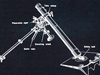
8cm Gr. W mortar
Wn62 Colleville-sur-Mer, (Omaha Beach)

Plan
Details
Plan of the area with a Welblech two roomed crew quarters Vf2d. The mortar Tobruk with the radio/telephone.

A Vf2d bunker plan.
Wn62 Colleville-sur-Mer, (Omaha Beach)

25 March 2015
Details
Entrance to the Vf2d.

Plan.
Wn62 Colleville-sur-Mer, (Omaha Beach)

25 March 2015
Details
Walking down into the bunker a Vf2d which had been finished by its builders just before D-day.

Plan.
Wn62 Colleville-sur-Mer, (Omaha Beach)

25 March 2015
Details
Based on a Vf2d design with two Welblech style bunkers, one with higher walls and a half round roof. Two windows.
Living in this bunker up to D-day was Soldat Drews, Lehrmann, Plota, Selbach, Corporal Krieftewirth 35 years and Gockel 18 years old.
Frans Gockel used a Polish M.G.08 7.6mm water cooled machine gun on D-day.

The men of Wn62. .

Plan.
Wn62 Colleville-sur-Mer, (Omaha Beach)

25 March 2015
Details
Based on a Vf2d design with two Welblech style bunkers, the second is a full half round Welblech and an escape.
Wooden bunks with straw mattresses. Originally they were housed in wooden huts.

Plan.
Wn62 Colleville-sur-Mer, (Omaha Beach)

25 March 2015
Details
The escape.

The escape outside.

Looking down the escape.

Plan.
Wn62 Colleville-sur-Mer, (Omaha Beach)

25 March 2015
Details
The view looking towards the entrance.
Crew enjoying the evening.

Plan.
Wn62 Colleville-sur-Mer, (Omaha Beach)

25 March 2015
Details
The way in.

Plan.
Wn62 Colleville-sur-Mer, (Omaha Beach)

25 March 2015
Details
Lichtsprechgerät 80 direct line radio/telephone.
Plan.
Wn62 Colleville-sur-Mer, (Omaha Beach)

25 March 2015
Details
Lichtsprechgerät 80 direct line radio/telephone.
Plan.
Wn62 Colleville-sur-Mer, (Omaha Beach)

Signals Corps US Army (Cherbourg)
Details
Lichtsprechgerät or RSV for short - Manufacturer Carl Zeiss. I believe this is the type of unit used here.
Lichtsprechgerät - (literal translation) - Light talkie. Light phone.

Li Spr 80.

Training on a Photo phone Li Spr 80.
Wn62 Colleville-sur-Mer, (Omaha Beach)

19 March 2006
Details
Looking up into the Lichtsprechgerät 80 direct line radio/telephone part of the bunker.
Oberschütze ("senior rifleman") Plota used a Licht-signalgerät (signal lamp) to contact other Wn's if the radios or telephone cables are broken.
Wn62 Colleville-sur-Mer, (Omaha Beach)

19 March 2006
Details
This concrete bunker was a radio transmitter/receiver using line of sight.
Wn62 Colleville-sur-Mer, (Omaha Beach)

25 March 2015
Details
The other end of the Lichtsprechgerät 80 direct line radio/telephone I believe was in the Colleville church tower.
Which was a very good idea, it meant that they could talk directly to each other without coding the message and the messages could not be heard by any other radio receivers. There may have been one small problem. If you knock it, the beam moves and needs to be re aligned. So when the area was bombed and then shelled, this would have knocked the beam out of true. With more shelling, this may have made it inoperable.

The outside the Lichtsprechgerät bunker.

Lichtsprechgerät 80 direct line radio/telephone.
Wn62 Colleville-sur-Mer, (Omaha Beach)

25 March 2015
Details
Vf69 mortar Tobruk looking into: -
Left - Ammunition room - Mortar space - Tobruk lookout/M.G. - Crew space..

Two GrW34 8cm Mortar crews.

Mortar crew.
Plan.
Wn62 Colleville-sur-Mer, (Omaha Beach)

19 March 2006
Details
Mortar Tobruk and the observation/M.G. Tobruk.
There was a mortar inside the large Tobruk and the smaller one had a machine gun in the ring with Cpl. Schnichels.

8cm mortar Tobruk at Wn73 further along the beach.
M.G. Tobruk..
Observation.
Wn62 Colleville-sur-Mer, (Omaha Beach)

19 March 2006
Details
View of the memorial from the trench.
Wn62 Colleville-sur-Mer, (Omaha Beach)

11 November 2016
Details
Trench system continuing on down the hill, the retreating Germans as you can see must have had a real problem retreating up this hill. Ships below, could see anybody trying to move along them.

Plan

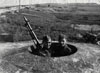
Sgt. Schulte & Corp. Hamming used a twin anti-aircraft machine gun like this one.
Wn62 Colleville-sur-Mer, (Omaha Beach)

11 November 2016
Details
Vf61a 5cm Mortar Tobruk.
This one did not have a mortar fitted on D-Day. Sgt. Fôrster & Corp. Bersik were here.
The Americans fighting Wn60 said the 5cm Mortar was a nuisance weapon. They saw them being fired and fly through the air and they just ducked down and and the small explosive went off with a puff. They were more blast bombs, if hit by them though, they could obviously damage. The 80/81mm mortars were very different, they killed possibly more American soldiers on D-Day than any other weapon.

Plan

Plan Vf61a 5cm Mortar Tobruk.
Wn62 Colleville-sur-Mer, (Omaha Beach)

25 March 2015
Details
The second Vf61a 5cm Mortar Tobruk.

Signal lamp.

Mortar crew firing.

5cm

Box of 5cm mortar bombs.
Wn62 Colleville-sur-Mer, (Omaha Beach)

19 March 2006
Details
Memorial to the 5th Engineer Brigade.

5th Engineer Brigade.

Second Lieutenant Walter Sidlowski of 348th Engineer C Battalion, 5th Engineer Special Brigade, on Omaha Beach, Normandy, after helping to rescue a group of drowning soldiers after their landing craft sank on the morning of 7th June 1944 during the Normandy Landings...

Company "B" 336 ENGR.(C) BN. June 6th 1945 Miesenheim Germany.
Wn62 Colleville-sur-Mer, (Omaha Beach)

25 March 2015
Details
Entrance to a small concrete bunker/shelter.

Plan.

Plan.
Wn62 Colleville-sur-Mer, (Omaha Beach)

19 March 2006
Details
Looking into the bunker/shelter room. This was the radio room to transmit artillery information from the observation officer to the gun line.
Plan.
Wn62 Colleville-sur-Mer, (Omaha Beach)

19 March 2006
Details
A window inside the bunker/shelter room.
Corp. Warnecke and Pt. Schulz ran the radio link to the 1./AR352 at Houtteville with four 10.5 cm FH18. They also had an MG34 machine gun used on D-Day.

10.5 cm FH18.

MG34 machine gun .
Wn62 Colleville-sur-Mer, (Omaha Beach)

19 March 2006
Details
Trench along the front.

Plan.
Wn62 Colleville-sur-Mer, (Omaha Beach)

19 March 2006
Details
This was to be a guard room bunker.
There was under construction an R667 casemate for a 5cm KwK gun further down the hill.

Looking down from above you can see the layout.
Wn62 Colleville-sur-Mer, (Omaha Beach)

23 March 2015
Details
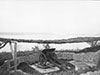
A concrete position for a piece of field artillery giving direct fire onto the beach. There were two of these, the other to the left. Now removed. A 7.5cm F.K.235 (b). (Others say they were Czech?) would have sat here but one may have been moved into one of the R669 casemates that had just been built before the 6 June.

Plan.
This is how it may have looked with a camouflage net over the top to hide the gun. 7.5cm F.K.235 (b).

Shells and case for a 7.5cm gun in a wooden box.
Wn62 Colleville-sur-Mer, (Omaha Beach)

1943/4
Details
This is one of the field guns covering the beach
Wn62 Colleville-sur-Mer, (Omaha Beach)

23 March 2015
Details
A concrete position for a piece of field artillery giving direct fire onto the beach.
100.jpg)
Gunners cleaning their gun.

Cordite powder bags to fit into the shell case.
Wn62 Colleville-sur-Mer, (Omaha Beach)

11 April 2018
Details
Artillery Obs. Lt Frerking. Corporal Hein Serverloh.
1./352 at Houtteville
Field Batterie nördl. von Houtteville 1., Artillerie-Regiment 352, 4 x 10.5cm FH18 guns.

10.5 cm FH18.
10.5 cm FH18.

Houtteville is four km south of Wn62.
Wn62 Colleville-sur-Mer, (Omaha Beach)

11 April 2018
Details
Artillery Obs. Lt Frerking. Corporal Hein Serverloh.
1./352 at Houtteville
The entrance to the observation.

Artillery Obs. Lt Frerking.

Corporal Hein Serverloh.
Wn62 Colleville-sur-Mer, (Omaha Beach)

19 March 2006
Details
Artillery Obs. Lt Frerking. Corporal Hein Serverloh.
1./352 at Houtteville
There were up to three men in here,
Lt Frerking, a radio/telephone operator and one other.

Plan.

The sort of sight Lt. Frerking would have used is a scissor type range finder.

A scissor type range finder.
Wn62 Colleville-sur-Mer, (Omaha Beach)

19 March 2006
Details
Artillery Obs. Lt Frerking. Corporal Hein Serverloh.
1./352 at Houtteville
This is Lt Frerking that he would have had and he could call down fire from the four 4 x 10.5cm FH18 guns onto the pre registered targets.
As the day went on the battery gradually ran out of ammunition and ceased firing. Its ammunition resupply lorry was hit by a 15inch shell and was blown up.
Arnsberg - Anhalt - Ursula - Andranach - Anna - Altenburg - Frieda and Aller are all pre registered targets for the beach area, these
Lt Frerking called call down from his batterie situated at Houtteville.
Lt Frerking.
Wn62 Colleville-sur-Mer, (Omaha Beach)

19 March 2006
Details
Artillery Obs. Lt Frerking. Corporal Hein Serverloh.
1./352 at Houtteville
The observation slit where Lt Frerking was shelled out by the Destroyers out at sea and killed.

USS Shepler shelling Wn60.
Wn62 Colleville-sur-Mer, (Omaha Beach)

19 March 2006
Details
Artillery Obs. Lt Frerking. Corporal Hein Serverloh.
1./352 at Houtteville.
The view from lower down the slope.
Plan.
Wn62 Colleville-sur-Mer, (Omaha Beach)

19 March 2006
Details
A comment from
Corporal Hein Serverloh in his book 'Wn62' he states that after firing thousands of rounds, his ammunition was getting low and he had to use tracer rounds. These have every fifth bullet that lights up and can be seen at night, but also in day time. Seeing the tracer fire an American Destroyer targeted his position and started to blow it up. Thus the damage to the observation slit. Corporal Hein Serverloh was in a trench to the right of his officer Lt Frerking. Lt Frerking came out of his small observation and asked was I OK and I felt I was better off in the trench than in a bunker. After running low on ammunition and being wounded, he tried to escape by running up the hill away from the beach. He was captured late in the afternoon of D-Day.
Corporal Hein Serverloh.
7.6mm Polish machine gun.

Tracer fire.
Wn62 Colleville-sur-Mer, (Omaha Beach)

19 March 2006
Details
Ammunition niches situated along the trench with concrete doors.

Plan of the ammunition niches.

7.92mm machine gun ammunition.

7.9mm brass ammunition.
Wn62 Colleville-sur-Mer, (Omaha Beach)

19 March 2006
Details
Ammunition niches situated along the trench.
Franz Gockel used a Polish MG08 water cooled machine gun on D-day.
Firing his machine gun at the soldiers landing, after firing for most of the day a direct hit on the gun blew it apart. He tried to escape and is hit in the arm by a bullet. He and several others managed to escape and he was patched up in Bayeux.
Gockel was a member of the 3./Gren.Regt.726.

Polish MG08 water cooled machine gun.

Franz Gockel.

Machine gun belt.

Machine gun ammunition box.
Wn62 Colleville-sur-Mer, (Omaha Beach)

19 March 2006
Details
Ammunition niches situated along the trench. Further down and on the left an R667 casemate was to replace the 5cm KwK in its open position.

Plan of an R667 casemate for a 5cm KwK gun that was being built (but not finished) along this trench lone.
R667 casemate..

5cm KwK L/42 gun.
Wn62 Colleville-sur-Mer, (Omaha Beach)

11 April 2018
Details
A 5cm KwK L/42 in a field position. This was an early method of using a 5cm KwK, later they were placed in ringstands and then into R667 casemates. This gun was due to be placed into an R667 casemate but it had not been finished.

5cm KwK L/42 gun field position mounting.

A 5cm KwK base in a field position.
5cm ammunition.
Wn62 Colleville-sur-Mer, (Omaha Beach)

US Signals Corps
Details
The 5cm KwK L/42 in a field position. This was an early method of using a 5cm KwK, later they were placed in ringstands and then into R667 casemates. This gun was due to be placed into an R667 casemate but it had not been finished. Cpl. Kuska & Pt. Heckman were the gunners here.
5cm KwK L/42 gun field position mounting.
A 5cm KwK base in a field position.
Wn62 Colleville-sur-Mer, (Omaha Beach)

11 November 2016
Details
R669 casemates. There are two casemates here and possibly the two field guns would have been moved from their open emplacements into these bunkers. I believe one had been moved in but the other not. This picture shows the flanking wall very well to protected the embrasure and gun from direct fire from the sea side direction and also helped to hide the gun flash from artillery spotters out at sea. Both these casemates were completed in April 1944.

Plan.
R669 60° for a Field Kannon.
7.5cm F.K.235 (b).
Wn62 Colleville-sur-Mer, (Omaha Beach)

11 November 2016
Details
R669 casemate with a direct hit on the flanking wall, it may have come from a Sherman tank on the beach firing up the slope and it ricochet off the wall.
R669 60° for a Field Kannon.
7.5cm F.K.235 (b).
Wn62 Colleville-sur-Mer, (Omaha Beach)

23 March 2015
Details
An R669 casemate built by the Bless Company a local French builder and finished in April 1944. An R669's was designed to take a 7.5mm Field Howitzer gun. Access for the gun should be via the rear door but here both casemates have had rear blast walls fitted. This may have been a local issue as I have never seen these in any other R669 bunkers.
I think there was no gun in this one just two rifle men.
R669 60° for a Field Kannon.

Details of the Bless Co. with the help of PNT. Thank you.
Wn62 Colleville-sur-Mer, (Omaha Beach)

23 March 2015
Details
R669 casemate gun room where Cpl. Brinkmeier and Private Lieberman probably manned this with either a machine gun or their rifles. A barrier would have been made with anything that came to hand like sand bags and timber.
The rear entrance has a double wall covering the rear from being shot at from the sea. The only trouble is, how could they get the gun in? Well one answer was - there was no gun here on D-day as the casemate had only just been built and the gun not fitted.
Wn62 Colleville-sur-Mer, (Omaha Beach)

23 March 2015
Details
R669 casemate.
The gun room looks rather deserted. The squiggly lines on the walls are camouflage. When the casemate was being built, pieces of rope or old cement bags would be placed into the concrete and removed when the shuttering is taken away.
The interesting point here , is that the lines should have been on he outside. There was no need on the inside?

3" inch shell still embedded in the wall.
Wn62 Colleville-sur-Mer, (Omaha Beach)

23 March 2015
Details
R669 casemate.
View slightly curtailed now but it would have a view all the way down to the beach and to Wn73.
If the 7.5cm howitzer had been installed, it may have caused a lot of damage on the beach.
Wn62 Colleville-sur-Mer, (Omaha Beach)

11 April 2018
Details
R669 casemate.
A good view from the rear.

Plan.
Wn62 Colleville-sur-Mer, (Omaha Beach)

23 March 2015
Details
View over the top of the R669 looking down onto the beach.

Rommel visiting
Wn62 Colleville-sur-Mer, (Omaha Beach)

23 March 2015
Details
R669 casemate and Memorial to the 5th Engineer Brigade.
The second R669, this one did have one of the guns in place and would have shot at landing craft, tanks, etc. down on the beach.
7.5cm F.K.235 (b).
7.5cm ammunition.
Wn62 Colleville-sur-Mer, (Omaha Beach)

23 March 2015
Details
The trench up to the casemate.

Plan.
Wn62 Colleville-sur-Mer, (Omaha Beach)

11 November 2016
Details
The rear entrance with a chicane wall at the rear.
Wn62 Colleville-sur-Mer, (Omaha Beach)

19 March 2006
Details
R669 casemate.
View of the tight way into the casemate.
Wn62 Colleville-sur-Mer, (Omaha Beach)

23 March 2015
Details
R669 casemate gun room.
Cpl. Lehrmann, Cpl. Kriefteworth, Cpl. Hans Selbach and Emil’s Drews were the guns crew inside this bunker. Often the infantry in a Wn, were all riflemen. When a new gun rived it often had no crew, so the heavy weapons platoon often came and taught the riflemen crew how to use the gun.
A gun room firing.

Cleaning rods should have been hung on the wall.
Wn62 Colleville-sur-Mer, (Omaha Beach)

23 March 2015
Details
R669 casemate.
Camouflage as in the other bunker.

R669 under construction.
Wn62 Colleville-sur-Mer, (Omaha Beach)

23 March 2015
Details
R669 casemate. Gun room looking at the rear entrance.
A 7.5cm F.K.235 (b). would have sat here where the gunners would have fired off as many rounds as possible.

Damage inside.
7.5cm F.K.235 (b).
Boxed ammunition.
Wn62 Colleville-sur-Mer, (Omaha Beach)

23 March 2015
Details
R669 casemate.
Well that has been shot at. The eight square shaped holes around the embrasure are for a door frame to be fitted to close off the gun room. These bunkers were not totally completed, although could be used. Very few bunkers ever had the steel doors fitted.
Wooden doors fitted to some bunkers.
Camouflage covering the embrasure.
Fired on by US and British destroyers.
Wn62 Colleville-sur-Mer, (Omaha Beach)

23 March 2015
Details
R669 casemate with the flanking wall covering the embrasure from direct fire.
Wn62 Colleville-sur-Mer, (Omaha Beach)

23 March 2015
Details
R669 casemate.
Being used by the Americans after D-Day.

Defence soldiers building beach defences. They spent too much time in building and not enough time training.
Wn62 Colleville-sur-Mer, (Omaha Beach)

23 November 2008
Details
Now we move into the attack.
The view many Americans would have seen. They landed at low tide which is a long way out, with no cover except any water deep enough to hide or any of the Rommel's asparagus. There was supposed to be bomb craters to hide in, but as the bombers missed the beach there were none to sneak into.
Wn62 Colleville-sur-Mer, (Omaha Beach)

1944
Details
This was an air photo made into a model to show the heights. This would have been in the pre D-Day camp. In Dorset they were called 'D' camps. There were many around the Dorchester, Weymouth area. All units due to land on D-Day on Omaha Beach were locked up in these camps for security reasons. D-Day was to be 5th June 1944, just before the troops moved down into Weymouth and Portland and loaded on their LST (L)'s and LST's. Several sailed and had to be called back.
Then they sailed in convoys through mine swept channels until they reached their dropping off points.

Plan of 'D' camps.

Route to the camps.

D camp pyramid tents.

US troops loading into British RN landing craft.

Loading at Portland..

LCT loading Portland.
Wn62 Colleville-sur-Mer, (Omaha Beach)

Bigot
Details
I cannot find a date for this map but it could be April/May 1944. These maps were issued to Bigoted officers. If you were in the know, you were a Bigot level security. If you did not know, you knew nothing at all and only worked on rumours from your mates.

A Bigot stamp.

Senior American Officers.
Wn62 Colleville-sur-Mer, (Omaha Beach)

Bigot
Details
Bigot Map
This now a close up shows the layout and positions of the defences, wire, mines, MG, etc.
Wn62 Colleville-sur-Mer, (Omaha Beach)


6th June 1944 -------------------------------------------------------------------------- DD
Details
The DD Sherman tanks were launched and were to be on the beach before the infantry. The sea was very rough and many DD's sank, but a few did land and did a lot of good work.
Wn62 Colleville-sur-Mer, (Omaha Beach)

6th June 1944
Details
Wn62 Colleville-sur-Mer, (Omaha Beach)

6th June 1944
Details
Wn62 Colleville-sur-Mer, (Omaha Beach)

6th June 1944
Details
DD tanks about to be launched.
You can see the two special ramps sticking out from the LCT's ramp, to allow the DD to move further away from the LCT's bow.
The propellers for the DD are at the rear, so the tank needs to get into the water to allow the props to bite into the water.

Sherman DD launching.

Sherman DD in a rough sea.

US DD on the beach.
Wn62 Colleville-sur-Mer, (Omaha Beach)

6 June 1944
Details
DD and two wading Sherman's just below Wn62.
Wn62 Colleville-sur-Mer, (Omaha Beach)

6 June 1955
Details
Another view of Belgian gates, a DD Sherman, a bulldozer and a beach marker.
Wn62 Colleville-sur-Mer, (Omaha Beach)

23 March 2015
Details
 Norway (coming soon!)
 France
 Great Britain