RAF Grove, Berkshire.
USAAF Station 519

Details
Authority for
acquisition of RAF Grove was given 14th
May 1941and followed the
standard 'A' type bomber station, requirements
including three runways, No. 1 5,979 feet long, No. 2 4,192 feet and No. 3 3,594, all at 60 degrees
to each other with a perimeter track of 50 feet. The airfield included both the older design of 125 foot
diameter circular "frying pans" dispersals, and with the newer design of "spectacle" shaped,
dispersal areas added later. Three building areas existed: West Technical Site (started between Spring
1942 and July 1943 [the original 'A' class]), No 2 Site Communal (started between 1942 and July 1943) and East
Technical Site (built by the American Airforce during 1944/45).
The original plans were to build a fully equipped bomber station for 91 Group. In June
1942 Brize Norton, Oxfordshire became a Glider Pilot training centre and Grove
was transferred to Brize Norton control.
Grove Airfield: United States of America Air Force
Having been used temporarily by the United States of America Air Force during the end of 1942, Grove was returned to R.A.F. use in January 1943. Between late 1942
and 28th July 1943 Grove was used as a Relief Landing Ground by the Heavy Glider Conversion Unit from Brize Norton, whilst improved runways were constructed.
From 27th. April 1943 until 27th. July 1943 Grove became a satellite airfield for R.A.F. Andover, Hants. Of the number of units involved, it is known that No.15 Pilot
Advanced Flying Unit was operational from Grove at that time.
Into 1943 the airstrips remained incomplete, the airfield surface being marred by depressions and ditches. From 4th. August 1943 the 8th (later 9th) United States American Air Force Support Command took control. Between 1943 and 1945 Grove Airfield was the base for 3rd Tactical Air Depot (9th A.F.) and 31st Air Transport Group (9th A.F.) as a repair and maintenance base, at first for C47 Douglas Dakotas (the mainstay transportation aeroplane for both R.A.F. and U.S.A.A.F), and later by C46 Commandos and Communication Flights of the 9th.
Grove Airfield: Return to RAF use
Grove remained under United States American Air Force command until 1946. The Operational Record Book records the change: ".... 12th. February 1946, Marching in
and out inspection on handing over of Grove to No. Z65 Maintenance Unit took place at Grove, 1600hs. Board of Officers consisted of F/Lt P.P.G.Smith, President, F/O
W.H.Smith, Major Stockwell (last U.S.A.A.F. Commanding Officer for Grove Airfield), Clerk of Works, members".

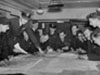
Glider pilot briefing.

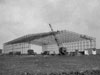
Relief Landing Ground by the Heavy Glider Conversion Unit.

USAAF C47.
RAF Grove, Berkshire.
USAAF Station 519
Details
RAF Grove, Berkshire. USAAF Station 519


AM Plan ---------------------------------------------------------- January 1944
Details
At the end of the second world war attention turned from the use of the runways (which
remained available as relief landing ground) to the 180,000+ square feet of storage space.
The site contained an assortment of buildings designed during 1941, 1942 and 1943. They
included six T2 Hangars and several American made storage buildings which contained large amounts of aircraft parts salvaged during
maintenance work.
The final change came on 1st. December 1955 when responsibility for Grove Airfield was
transferred to No. 3 Maintenance Unit, R.A.F. Milton, Berks, from No. 431 Equipment
Depot. Staff were reduced to store men and Security Police. Grove was controlled
from Milton(RAF Milton was the main RFC then RAF storage facility in the UK) until the last day of 1958 when the Operational Record Book
records: "....All functional stock was cleared from No. 6 Site at Grove during the month
and it was closed on 31st. December 1958....
signed T.King, Group Captain, Commanding
Officer."
Taken from Vale and Downland Museum – Local History Series
Grove Airfield
by Bill Fuller with added information from me.

Vale and Downland Museum.

US Quartermasters store.
RAF Grove, Berkshire.
USAAF Station 519


02 January 2010 ------------------------------------------------------------------- Google
Details
Was the Gate Guard until I believe it blew down.
A Swiss
DH Venom.
Found it on Google, sad end.

In Swiss colours.
RAF Grove, Berkshire.
USAAF Station 519

10 April 2005
Details
Memorial to the RAF & USAAF.
RAF Grove, Berkshire.
USAAF Station 519

10 April 2005
Details
Main runway looking almost due north.

Plan.
RAF Grove, Berkshire.
USAAF Station 519

10 April 2005
Details
The last of the six T2 hangars built here.
The water tower looks to be the originally and has been re clad.
RAF Grove, Berkshire.
USAAF Station 519

10 April 2005
Details
Four large TB huts right next to the T2 hangar. (all now have been removed).
TB - Temporary Brick.
PB - Permanent Brick.

Plan.
RAF Grove, Berkshire.
USAAF Station 519


10 April 2005
Details
Four large TB huts right next to the T2 hangar. (all now have been removed).
The compound was
for the fuel compound.

Fuel compound 9108/41.

Looking like this..
RAF Grove, Berkshire.
USAAF Station 519

10 April 2005
Details
A TB hut double aspect, may have been Guard House and Fire Party. I have a site plan with numbers on (not very clear) but there is no list of hut types & names unfortunately.
There would have been a boiler under the tower to heat water to bath and wash in.

Water tank..
RAF Grove, Berkshire.
USAAF Station 519

10 April 2005
Details
No.182.
A TB hut double aspect.

Hot tank.
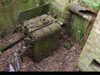
Boiler.
RAF Grove, Berkshire.
USAAF Station 519

10 April 2005
Details
Track to the Sewage works and the bomb store.

Plan.

Site plan.
RAF Grove, Berkshire.
USAAF Station 519

10 April 2005
Details
The first bomb store building, could be a fuze store??

Fuzing Points.
RAF Grove, Berkshire.
USAAF Station 519

10 April 2005
Details
This is the road leading down to the bomb store and on the right was a fuzing point.

Plan.
RAF Grove, Berkshire.
USAAF Station 519


10 April 2005
Details
Bomb store track to the second Fuzing point.
Possibly a Ultra Heavy Fuzing Point. Original Grove was to be a bomber station, so the bomb store was a full 'A' class store.
RAF Grove, Berkshire.
USAAF Station 519


10 April 2005
Details
Inside quite a vast space.
Details.

Plan.
RAF Grove, Berkshire.
USAAF Station 519

10 April 2005
Details
A third fuzing point demolished at the date we visited.
RAF Grove, Berkshire.
USAAF Station 519


10 April 2005
Details
Further down in where the main bomb storage area was. Possibly a bomb component store.

Main bomb store..
RAF Grove, Berkshire.
USAAF Station 519

10 April 2005
Details
Sewage Site numbered 333 on the site plan.

Sewage Site numbered 333 on the site plan.
RAF Grove, Berkshire.
USAAF Station 519


10 April 2005
Details
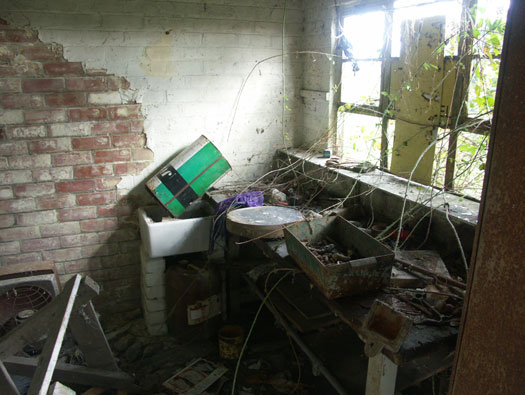
Left the destructor house and right the tool shed.

Plan.
RAF Grove, Berkshire.
USAAF Station 519

10 April 2005
Details
Inside and it was still in good condition still having tools.
RAF Grove, Berkshire.
USAAF Station 519

10 April 2005
Details
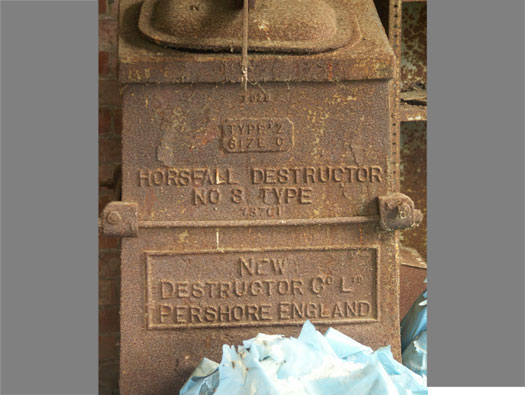
he destructor, I have no idea its use. But all RAF stations and army camps, had a destructor?
RAF Grove, Berkshire.
USAAF Station 519

10 April 2005
Details
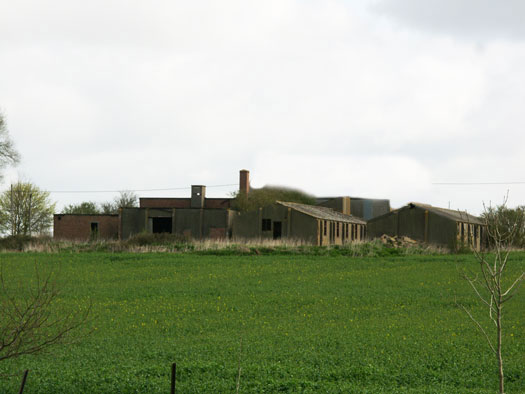
Operations Block 228/43.
This is how it looked in 2005.
And this is how it would have looked without the modern barn behind.
RAF Grove, Berkshire.
USAAF Station 519

10 April 2005
Details
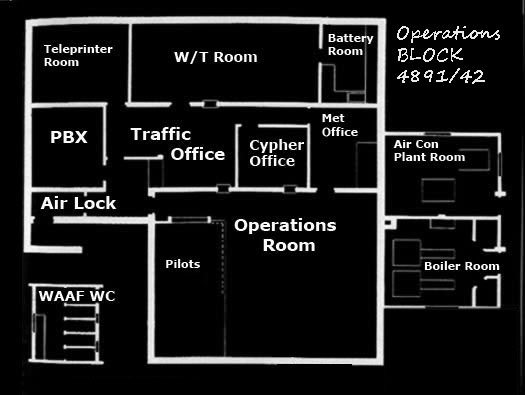
Operations Block 228/43.
The layout of buildings.
Plan of a 4891/42 Operations Block very like the 228/43 that is here.
Plan and information from Military Airfield Architecture by Paul Francis. A must of a book to own.

Military Airfield Architecture by Paul Francis.

British Airfield Buildings of the Second World War. Another must book to own.
RAF Grove, Berkshire.
USAAF Station 519

10 April 2005
Details
Operations Block 228/43.

Plan.
RAF Grove, Berkshire.
USAAF Station 519


10 April 2005
Details
Picket Post. (Police Post)
Everybody arriving and leaving
would have to show a pass and be signed in and out.
The two doors on the right would have been a toilet and a rest room/guarded room.
Plan.

RAF Police.
RAF Grove, Berkshire.
USAAF Station 519


10 April 2005
Details
Picket Post.
Concrete wash basin.
RAF Grove, Berkshire.
USAAF Station 519


10 April 2005
Details
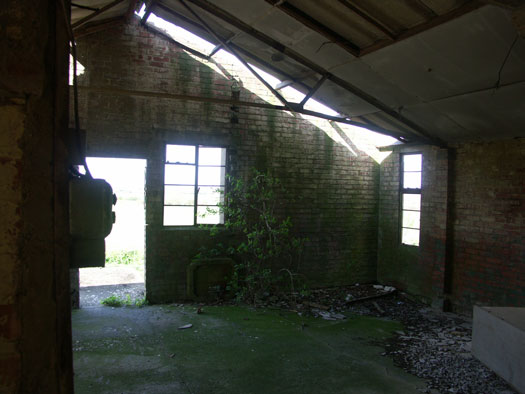
Two TB crew briefing rooms.
RAF Grove, Berkshire.
USAAF Station 519

10 April 2005
Details
One of the briefing rooms.
Operations briefing..
RAF Grove, Berkshire.
USAAF Station 519


10 April 2005
Details
One of the briefing rooms.
RAF Grove, Berkshire.
USAAF Station 519


10 April 2005
Details
One of the briefing rooms.

Intelligence office..
RAF Grove, Berkshire.
USAAF Station 519


10 April 2005
Details
Operations Block 228/43 around the back.
A blast wall has been cut down to make access easier for the farmer.
Latrines, one the RAF latrine and the other a W.A.A.F. latrine.
W.A.A.F.’s. were used a lot on RAF camps running the PBX (Private Branch Exchange) the local telephone network, in planning, printing, documentation, in fact any job that did not mean they would shoot a weapon.

Plan..
RAF Grove, Berkshire.
USAAF Station 519

10 April 2005
Details
W.A.A.F. latrine 9026/41 type.

Plan latrine 9026/41 type..
RAF Grove, Berkshire.
USAAF Station 519


10 April 2005
Details
Operations Block 228/43 made of permanent brick (PB), steal and reinforced concrete.

Plan.
RAF Grove, Berkshire.
USAAF Station 519


10 April 2005
Details
Operations Block 228/43 made of permanent brick (PB), steal and reinforced concrete.

.
RAF Grove, Berkshire.
USAAF Station 519

10 April 2005
Details
Operations Block 228/43made of permanent brick (PB), steal and reinforced concrete.
RAF Grove, Berkshire.
USAAF Station 519

10 April 2005
Details
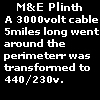
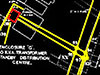
M&E plinth.
Electricity came in usually from an underground cable and the M&E plinth was a distribution point.
Here there is also an overhead cable.

Cable.
RAF Grove, Berkshire.
USAAF Station 519


10 April 2005
Details
M&E plinth.

A double M&E gate. Here there was a single gate..
RAF Grove, Berkshire.
USAAF Station 519

10 April 2005
Details
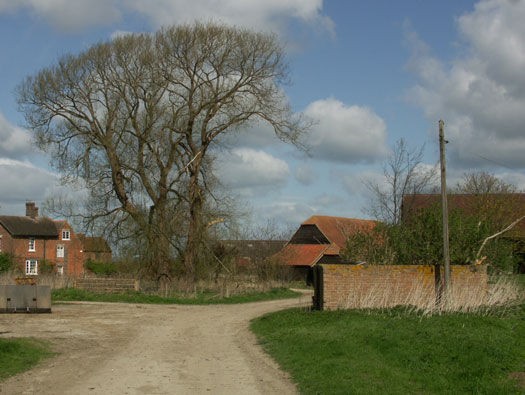
The RAF always do nice planting of trees.
RAF Grove, Berkshire.
USAAF Station 519

10 April 2005
Details
26 - 150ft circular (Frying Pan) dispersals.
50 - Spectacle dispersals.
2 - then 4 more added T2 hangars.
4 - large American sheds.
I cannot see a Control Tower?
Communal Site.
Sick Quarters.

Dispersals.

No.2 Communal site..

Sick Quarters.

USAAF Site (East Technical).

Original 'A' Class RAF bomber site.

Operations Block..
RAF Grove, Berkshire.
USAAF Station 519


10 April 2005
Details
24' Nissen Hut.

Plan.

24' Nissen hut inside..
.jpg)
24' Nissen hut as an Offices Mess..
RAF Grove, Berkshire.
USAAF Station 519

10 April 2005
Details
25yd range.

25yd range.

Plan.
RAF Grove, Berkshire.
USAAF Station 519


02 January 2010
Details
Shooting in butt end where there would be sand and the targets.
Firing point, a shelter area for shooting and two end rooms for storage and for the instructor.
Plan.
RAF Grove, Berkshire.
USAAF Station 519


02 January 2010
Details
25yd Range.
RAF Grove, Berkshire.
USAAF Station 519

10 April 2005
Details
 Norway (coming soon!)
 France
 Great Britain